How to cook frozen Ukrainian food so it tastes homemade
February 6, 2026
Frozen doesn’t have to mean “second best.” If you’ve ever had dumplings turn mushy, perogies stick together, or a filling dry out, it usually wasn’t the food — it was the method. Ukrainian comfort food is actually one of the best cuisines to freeze because the textures hold up beautifully when you reheat it the right way.
At UkrChef we make meals the way our families made them: real dough, real fillings, real flavors. This guide will help you get that “just cooked” result at home in Calgary — even on a weekday when you’re short on time.
The one rule that changes everything: don’t rush the heat
Most frozen foods get ruined because they go from freezer → high heat too fast. Dough-based foods (perogies, dumplings, crepes) need a gentle transition so the outside doesn’t overcook before the inside is hot. Think of it as waking the food up, not shocking it.
If you have time, move what you’ll eat from freezer to fridge the night before. It’s not mandatory, but it makes everything easier: cooking is faster, texture is smoother, and the chance of splitting or cracking is lower. If you don’t have time (that’s most of us), no problem — just use moderate heat and give it a bit more time.
Perogies: tender, not soggy
Perogies are simple, but they punish impatience. If you boil them aggressively, they can burst or go waterlogged. The goal is a gentle simmer.
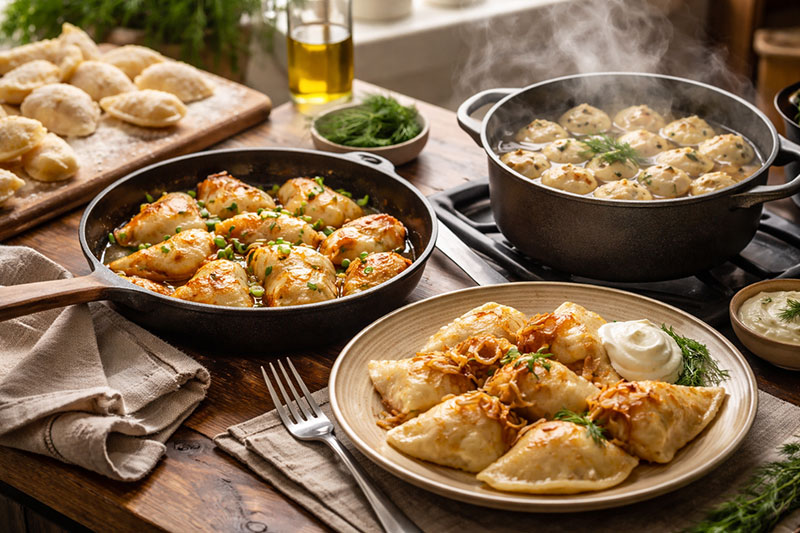
Bring a pot of water to a light boil, then reduce to a simmer. Add perogies in small batches so the water temperature doesn’t crash. Once they float, give them another minute or two, then lift them out carefully. At that point they’re cooked — but if you want restaurant-style flavor, finish them in a pan.
Heat a skillet on medium, add a little butter or oil, and sauté until they get that golden edge. This pan finish is what makes them taste “fresh,” not reheated. If you like the classic vibe, add onion to the pan first, then perogies, and finish with a spoon of sour cream on the plate.
A quick tip that saves dinner: if perogies stick to the bottom of the pot, don’t stir aggressively. Just nudge gently and keep the simmer low. Most sticking is from too much heat.
Dumplings / pelmeni: juicy inside, delicate outside
Dumplings do best in a steady simmer, not a rolling boil. A hard boil can tear the wrapper or make the meat tough.
Use a wider pot so they have space. Start with simmering water (not raging), add dumplings, and keep the heat moderate. When they rise, let them cook through — the timing depends on size, but the real sign is that they look slightly plumper and the wrapper becomes more translucent.
If you want the best texture, try the “boil + pan” method: cook them through in water, then quickly sear in a hot pan with a bit of oil until one side gets crisp. It’s the contrast (soft + crisp) that makes dumplings feel like you just made them.
Serve with something bright to balance the richness: sour cream, a little vinegar, chopped herbs, or even a simple garlic sauce. Ukrainian food loves creamy-and-tangy together.
Crepes / nalysnyky: keep them soft, never rubbery
Crepes hate direct high heat. Microwave blasting is what turns them rubbery. The better approach is gentle oven warmth.
Place them in an oven-safe dish, cover tightly with foil (this keeps moisture in), and warm at a low temperature until heated through. If you’re in a hurry, the microwave can still work — just do it in short bursts, covered, and stop as soon as they’re warm. Overheating is the enemy.
If you’re reheating a filled crepe, the “covered” part matters even more. Steam is your friend here: it keeps the wrapper tender.
Cutlets, cabbage rolls, and baked dishes: moisture + steady heat
Anything that’s meat-based or sauce-based usually reheats best in the oven. The mistake people make is leaving it uncovered, which dries it out. Cover it, warm it gently, then uncover at the end only if you want a little browning.
For cabbage rolls, keeping them in sauce while reheating is key. If they look a little dry, add a splash of water or a spoon of sauce before reheating. You’re recreating the environment they were cooked in.
The “Calgary winter” bonus: think in batches
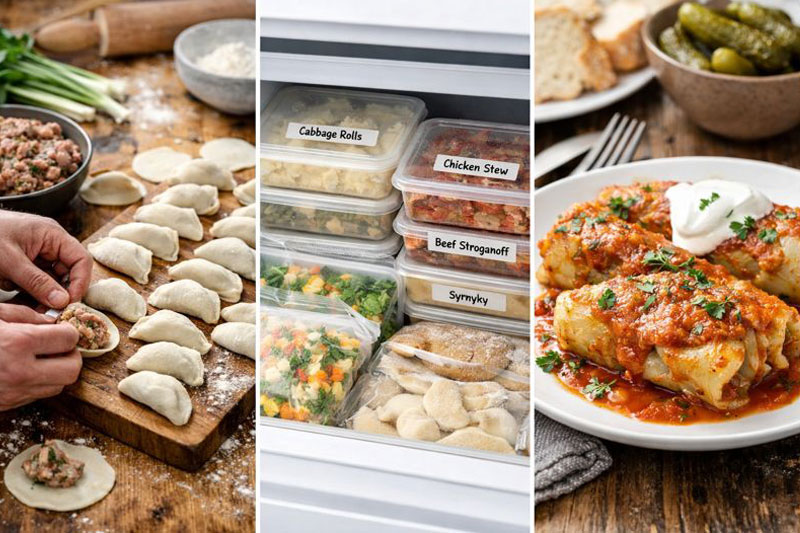
One of the smartest ways to use frozen meals is to cook in slightly bigger batches than you need. Perogies or dumplings reheat beautifully the next day if you store them properly. Once cooked, cool them, then keep them in the fridge in a container with a tiny bit of butter/oil so they don’t stick. Next day, a quick pan heat brings them back to life.
It’s the kind of habit that makes weeknights feel easy: you’re basically giving your future self a gift.
How to know you did it right
When frozen Ukrainian food tastes homemade, the signs are simple: dough is tender (not waterlogged), fillings are hot and flavorful, and nothing feels dried out. You shouldn’t need heavy sauces to “cover” reheated taste — you should just taste real ingredients.
That’s the whole point of cooking once (properly) and enjoying it twice.
If you want the easiest version of all this, stock your freezer with a few favorites, and you’ll always have something comforting ready in Calgary — even on the busiest days. You can browse our shop and if you ever want cooking tips for a specific item you ordered, just message us through our contact page. We’re happy to help you get the best result.